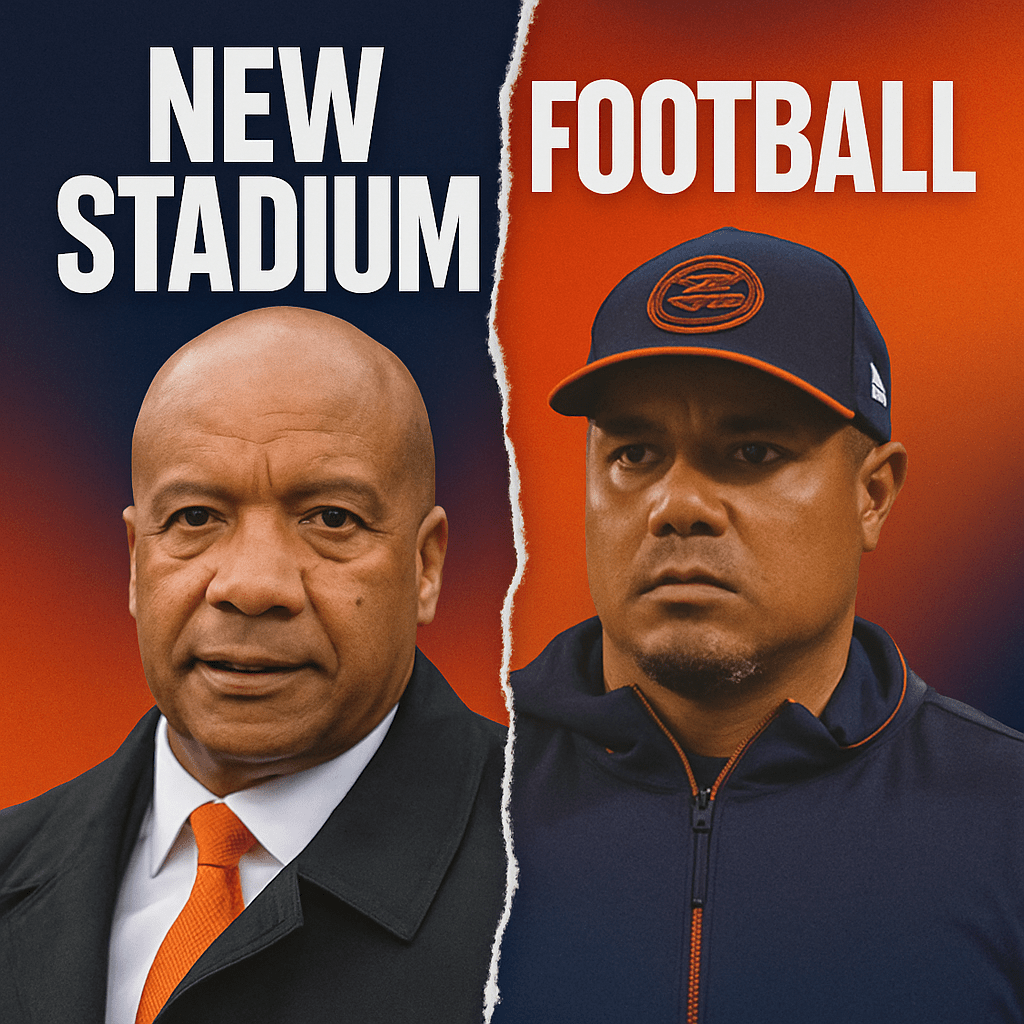
The Chicago Bears’ challenges extend beyond missed tackles, coaching decisions, or the development of a new quarterback. These are merely visible effects of a deeper organizational division. The franchise is currently being shaped by two distinct strategic visions: Kevin Warren, President and CEO, focusing on the establishment of a new stadium, and Ryan Poles, General Manager, endeavoring to construct a competitive team roster.
Both individuals possess considerable expertise in their respective areas; however, their concurrent initiatives have resulted in ambiguity concerning the team’s priorities. Organizational attention appears divided between infrastructure projects and football operations, with an emphasis on long-term business ventures over immediate team performance. Unless these priorities are reconciled, the Bears may struggle to progress competitively.
Kevin Warren: Strategic Focus on Infrastructure
Appointed in 2023, Kevin Warren was selected not solely for his administrative skills, but for his track record in developing landmark sports facilities, exemplified by Minnesota’s U.S. Bank Stadium. His mandate is to secure a new stadium project in Chicago—a move anticipated to increase revenue streams and enhance franchise valuation. While this approach aligns with ownership’s business objectives, it may be perceived by supporters as prioritizing future gains over current competitiveness.
Ryan Poles: Building Team Competitiveness
Tasked with revitalizing the player roster since 2022, Ryan Poles has implemented foundational changes, acquired draft assets and positioning the team to maximize the early career of quarterback Caleb Williams. Poles’ plan centers on cultivating a resilient, well-balanced team within the financial advantages afforded by Williams’ rookie contract. However, the window for such a transformation is narrow, and any delays threaten the effectiveness of this strategy.
Divergent Timelines and Metrics
This divergence manifests in contrasting time horizons: Warren’s objectives extend toward long-term infrastructure milestones, while Poles must demonstrate success in the short term, particularly before key player contracts require renewal. Their metrics also differ—organizational value versus on-field results—contributing to the current lack of alignment that affects overall team performance.
Organizational Performance Since Leadership Changes
Since Warren assumed leadership in April 2023, the Bears have compiled a combined 12–22 record (.353-win percentage), showing only marginal improvement from past seasons. The trajectory suggests a need for cohesive strategy, as operational focus remains unclear to both internal stakeholders and external audiences.
Historical Context and Lessons Learned
The Bears have previously encountered similar disruptions during the 2002 Soldier Field renovation, which coincided with a substantial decrease in performance and fan engagement. Even after stadium completion, it took several years for the team to recover competitively. These historical lessons highlight complications that can arise when organizational priorities become fragmented.
Impact of Divided Focus
A split vision at the executive level permeates all facets of the organization, affecting player morale, recruitment efforts, and public perception. Comparative examples across the league illustrate that successful franchises balance infrastructure development with decisive investments in team building, underscoring the importance of unified leadership.
For the Chicago Bears to realize their potential, alignment between the strategic objectives of executive leadership and football operations is imperative. Whether the focus is infrastructure or roster construction, integration of these goals will be essential for the franchise to deliver sustained success and restore stakeholder confidence. Without such cohesion, the Bears risk continued underperformance and unrealized opportunities.
 Because I Have a Live Mic
Leave a comment